





If you’ve repeated directions three times and still get asked, “What are we doing?” You’re in the right place!
It’s not that your students aren’t listening. It’s that your classroom is relying on you to hold all the information.
You’re the schedule.
You’re the reminder system.
You’re the behavior manager.
You’re the system.
That’s a full time job on top of your full time job. The fix for this isn’t working harder (thank goodness!) It’s setting up your classroom so that it runs with you.
These 7 classroom displays do exactly that. They help cut down on questions, smooth out transitions, and help your students function independently.
Schedule Cards: Stop the “What’s next?” Questions
If students don’t know what’s coming next, they will ask. Constantly.
A clear, visual schedule classroom display:
- keeps your day predictable
- helps students transition faster
- reduces anxiety (even in upper elementary)
The key is to make it easy to use. Keep it eye level. Use simple wording (and visuals if needed.) Update it in real time.
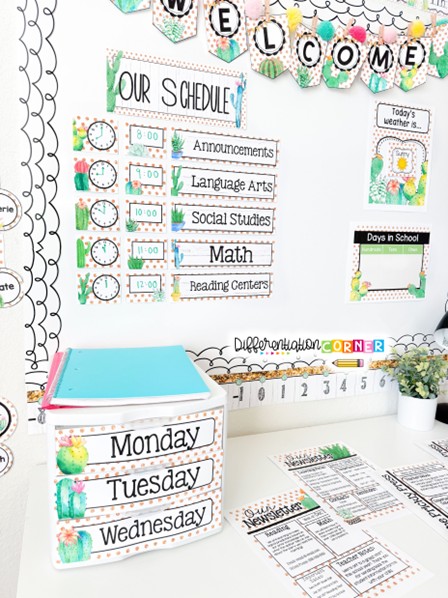
And here’s the part most teachers skip. Refer to it. All the time.
At first, you’ll point to it every 10 minutes. Then one day your students will start checking it on their own. That’s how you know it’s working. Read more about why you need a daily visual schedule in your room here.
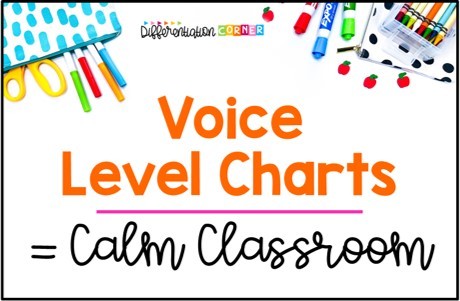
Voice Levels Chart: Because “Be Quiet” Isn’t Clear
“It’s too loud in here.” “Use your inside voice.” “Shhhh.” None of these options actually tell students what to do.
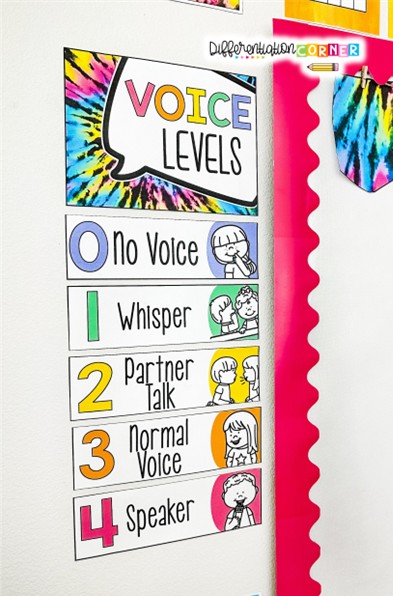
A voice level chart gives them a clear scale of acceptable volumes.
- 0 = Silent
- 1 = Whisper
- 2 = Partner Talk
- 3 = Group Work
- 4 = Presentation
Now instead of repeating yourself, you can just point to the chart and use that teacher look we all have. And suddenly you’re not managing noise with your voice… you have a system. Here’s how I use voice level charts in my room.
Hand Signals: Fewer Interruptions, More Teaching
You know the moment. You’re mid-lesson and in the zone. And then…
- “Can I go to the bathroom?”
- “I need a pencil!”
- “Can I get a drink?”
Multiply that by 25 kids and you’ve got a problem. Non verbal hand signals can fix that fast.
Students can silently get their needs met with no (well, less…) interruptions. No more derailed lessons.
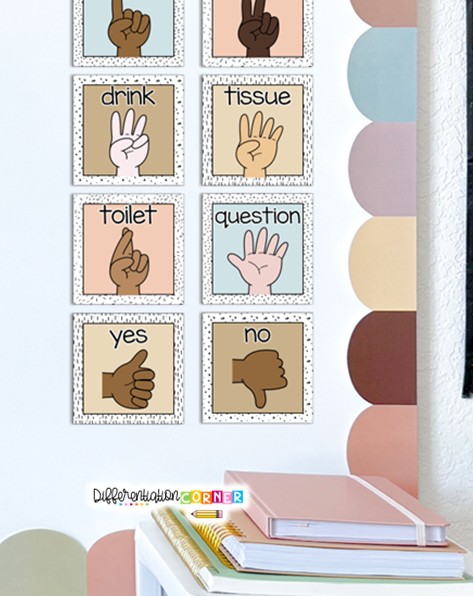
It takes a few days to train your students, but after that? Game changer!
Rules and Expectations Classroom Displays: Clear Beats Complicated
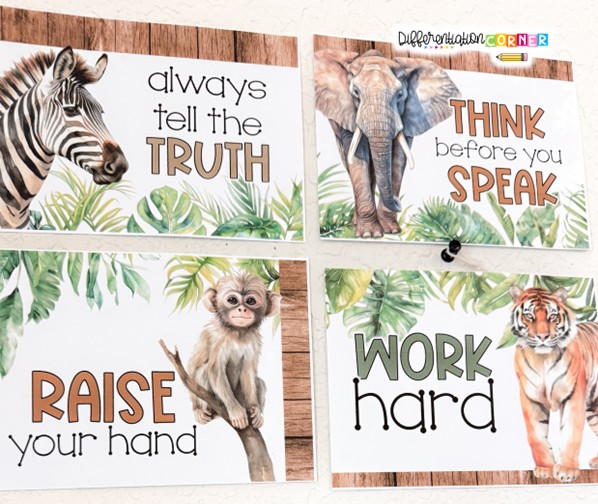
Rules shouldn’t be something you talk about once the first week of school and hope for the best. They need to be visible. Simple. And referred to often.
Long and wordy rules are complicated. If they’re short and clear, students will use them.
Think:
- Be respectful
- Be responsible
- Be ready to learn
Instead of calling out bad behavior, you can redirect. It shifts the focus from behavior correction to students thinking.
Looking for ideas on the best rules for your classroom? Read this blog post for my favorites.
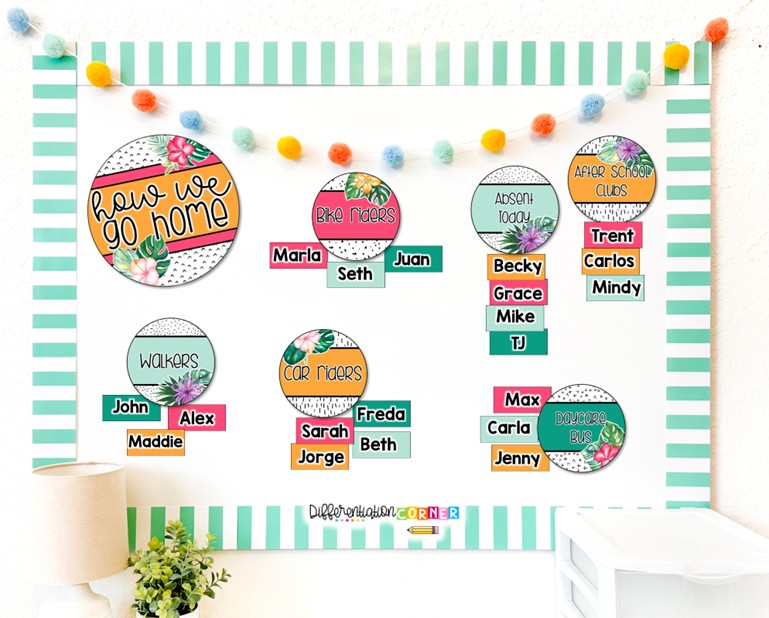
Dismissal Chart: The End of the Day Can Get WILD
Dismissal classroom displays have a way of turning the most stressful time of the day into an organized system.
Everything is clearly displayed so you’re not answering the same question 20 times in the last 10 minutes of the day.
Bonus: Your substitute will love it!
CHAMPS Chart: Set Expectations Before Your Activity Falls Apart
Most behavior issues don’t happen because students are trying to be difficult. They happen because expectations weren’t clear, or they were forgotten.
That’s where a CHAMPS chart comes in:
- Conversation
- Help
- Activity
- Movement
- Participation
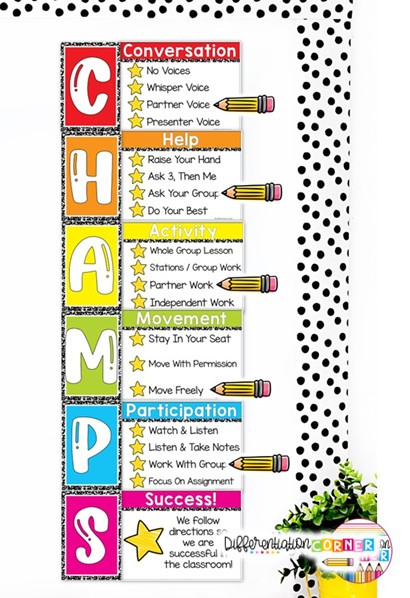
I use this chart to help me be clear before starting any activity. I quickly run through the expectations for each letter. “Voice level 2, stay in your seat, raise your hand for help…”
Now students know exactly what to do before things go off track. Which means a whole lot less redirecting students and fewer interruptions to manage behavior.
Daily Slides: Your Classroom’s Command Center
If you only use one of these classroom displays, make it this one! Daily slides pull everything together.
I use daily slides for:
- agenda
- morning message
- directions with lots of steps
- small group rotations
- to-do lists
During independent work? They don’t need to ask you 14 questions. They just look at the white board.
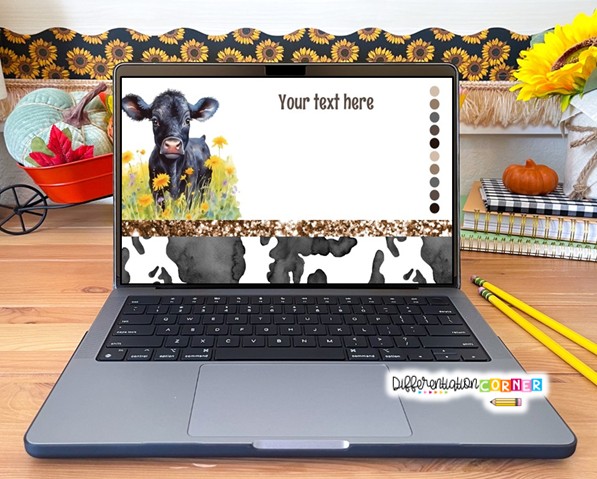
It’s like cloning yourself, but without the paperwork.
Decor That Actually Works
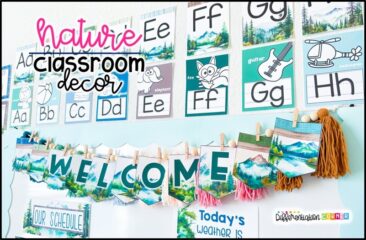
You don’t need more stuff on your walls. You just need the right things on them.
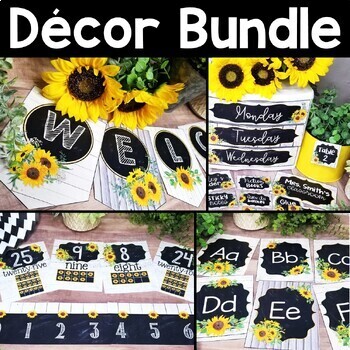
Classroom displays that save you time, support behavior, and build independence. The end goal is a classroom that functions AND looks good!
Ready to Make Your Class Run Itself?
It might be time to let your classroom displays do some work for you.
My classroom bundles include all of these must have systems and more. Already designed, coordinated, and ready to use.
Print it. Hang it. Done.