





If you’ve every written “add more details” on a student’s paper and then watched them just stare at you in confusion, you’re not alone.
We know what we mean, but they definitely don’t.
For a lot of students adding more details usually ends up with them adding one random adjective, repeating the same idea in a different way, or making the sentence longer without actually making it better.
It’s not necessarily that students are unwilling to elaborate. Most of the time descriptive writing needs to be explicitly taught.
Descriptive writing gets much easier when students are given some tools they can use instead of vague directions. These 5 descriptive writing activities are simple enough to work into your writing instruction and practical enough that students will actually use them in their own writing.
1. Start With a Boring Sentence
One of the easiest descriptive writing activities is to start with a sentence that gives students almost nothing to work with.
Try something like: Charlie rode his bike.
That’s it. Plain. Boring. Technically correct, but not exactly pulling us into the story.
Ask students what they could add to help the reader picture what is happening.
What did the bike look like?
How was he riding it?
Why was he riding his bike?
What was going on around Charlie?
Where was he going?
You might end up with something like: Charlie gripped the handlebars of his scratched blue bike and pedaled as fast as he could down the bumpy sidewalk, weaving around puddles as he raced toward his friend’s house before the dark clouds overhead turned to rain.
Now students can really see the difference between adding words and adding useful details.
This activity works well as a quick warm up because you can use almost any simple sentence. Put one on the board and give students two or three minutes to improve it.
The important part is the discussion about why certain details make the sentence stronger and not just longer. Long sentences and descriptive sentences are not the same thing.
2. Use the Five Senses
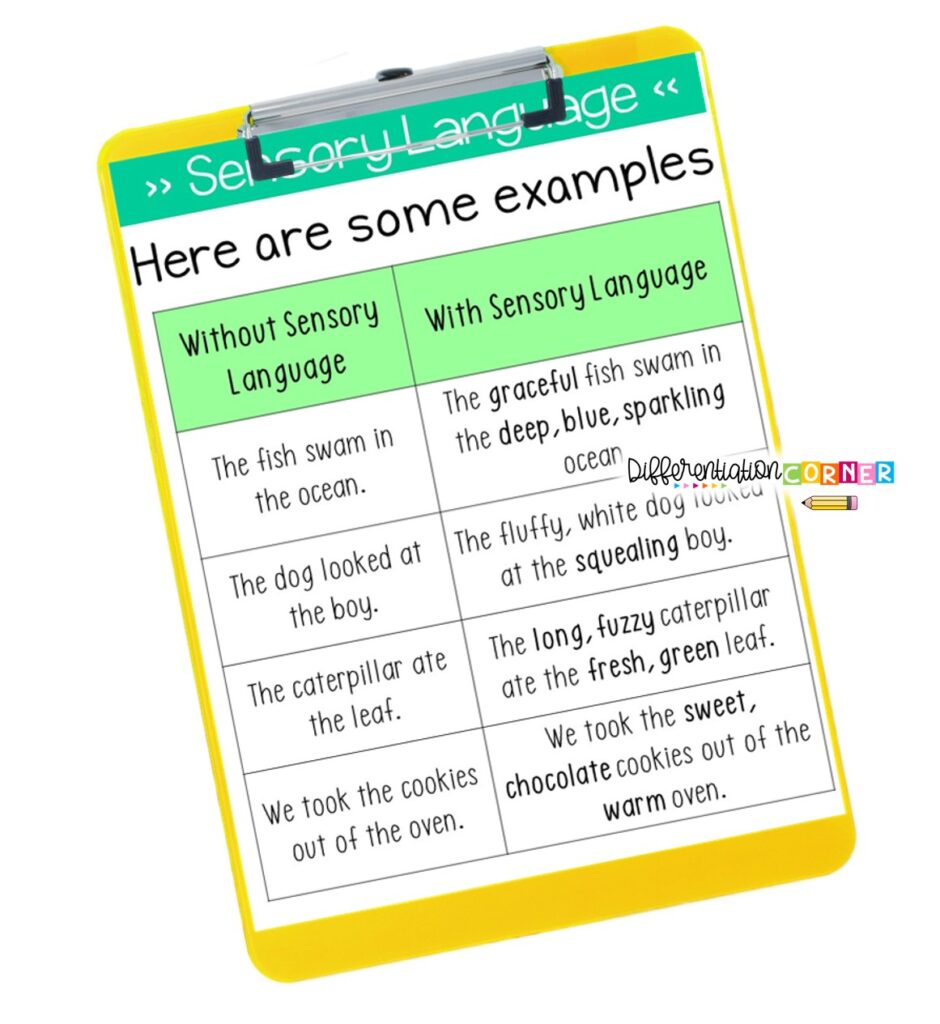
The five senses are one of the most familiar descriptive writing activities, but they’re familiar for a reason. They give students a concrete place to start.
Choose an object, place, food, or experience and have students brainstorm what someone might see, hear, smell, taste, and feel.
For example, if students are describing a carnival, they might brainstorm:
- flashing lights
- music playing
- the smell of popcorn
- sticky cotton candy
- people shouting
- the rough metal bar on a ride
Then have students use a few of those ideas to build a description.
One important reminder is that students do not need to use all five senses every time they write. Otherwise, we end up with paragraphs that sound like a checklist.
“I saw the beach. I heard the waves. I smelled the ocean. I tasted the salt. I felt the sand.”
Technically yes. A great paragraph? Nope.
Instead, teach students to choose the sensory details that actually help the reader experience the moment.
3. Build Better Sentences with Guided Elaboration
Some students can take a simple prompt and run with it. Others need more structure. And that’s how it goes with everything we teach.
Instead of telling kids, “Describe this better,” give students specific ways to elaborate.
They can add:
- sensory details
- adjectives
- stronger verbs
- actions
- thoughts
- feelings
- comparisons
- specific examples
This is where guided practice can make a huge difference.
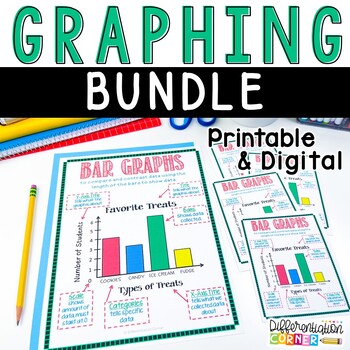
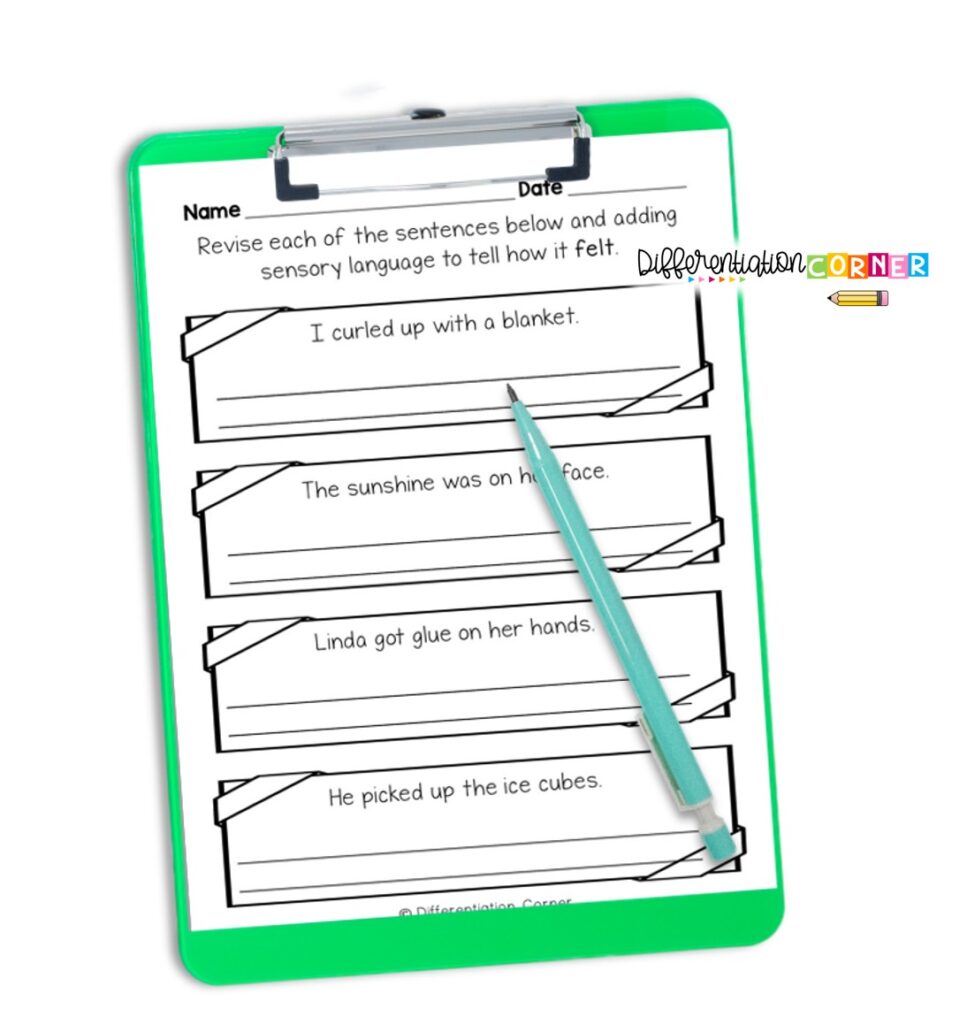
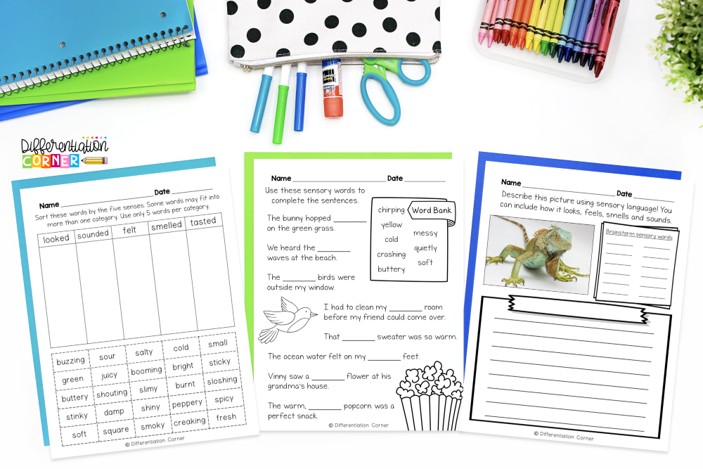
My Elaboration and Descriptive Writing Activities resource is designed to help students practice these skills step by step instead of expecting them to just know how to add detail.
Students work with sensory language, descriptive details, and sentence expansion so they can see what strong elaboration actually looks like.
You can use the descriptive writing activities as mini lessons, small groups, centers or independent writing practice.
The goal is not to turn every sentence into a masterpiece. It’s just to give students some tools to improve their writing.
Then when they’re revising and know a sentence or paragraph needs work, they’ll have actual experience and options besides staring at the page.
4. Zoom In on One Tiny Moment
Students often struggle with descriptive writing because they’re trying to describe too much at once. If the topic is “a day at the park,” they may rush through the entire experience in five sentences.
We got to the park.
We played.
We had a picnic.
We went home.
The end.
Instead, teach students to zoom in on one tiny moment.
Maybe its climbing to the top of the slide, dropping their ice cream cone, or trying to catch a frog near the pond. Ask students to slow that one moment down.
What happened first?
What did they notice?
What were they thinking?
What did they hear?
What did their body do?
What did someone say?
When students focus on one small piece of an experience, they have much more room to add meaningful details.
This is especially helpful during narrative writing because it helps students move away from just listing events and toward really developing a sentence.
5. Show It Without Naming It
This is one of my favorite descriptive writing activities to push students beyond basic description. Give students an emotion, object, place, or type of weather and challenge them to describe it without using the actual word.
For example: Describe nervous without writing, “I was nervous.”
Students might write: My hands felt sweaty as I twisted the edge of my paper. I kept bouncing my knee under the desk while I waited for my name to be called.
Now the reader knows the character is nervous without being told directly.
You can do the same thing with words like:
- angry
- excited
- freezing
- stormy
- crowded
- messy
- tired
This activity naturally encourages students to use actions, sensory details, stronger verbs, and specific descriptions.
It’s also a great way to teach the difference between just telling the reader something and helping the reader experience it for themselves. Read more about how to use the Show Don’t Tell descriptive writing activities and grab some free anchor charts in the post.
Keep It Simple
Descriptive writing activities don’t need to become a giant unit every time you’d like students to improve their writing.

You can teach one strategy at a time.
Use a boring sentence as a morning warm up.
Practice sensory language during a quick mini lesson.
Ask students to zoom in on one moment during narrative writing.
Challenge them to show an emotion without naming it.
Then keep coming back to these same strategies throughout the year.
The more familiar students become with these tools, the more likely they are to actually use them during independent writing.
Because, “Add more details,” isn’t really a strategy. It’s just feedback. And if we want students to become stronger writers, we need them to know what to do with that feedback.
Read more about how to teach descriptive writing, narrative writing, and dialogue with punctuation.