





If you’ve been teaching for more than 3 months, you’ve probably had a word wall in your classroom.
Maybe it was thoughtfully organized and used to the max. Maybe…. it slowly became a collection of laminated words nobody looked at after September? No judgement here.
We’ve all had a classroom display that started with the best intentions and eventually just became wallpaper.
Now sound walls are showing up more in elementary classrooms, especially as schools put more focus on phonemic awareness, phonics, and structured literacy.
So naturally, elementary teachers are wondering:
Do I need a Sound Wall instead of a Word Wall? Not exactly.
Sound walls and word walls can both be useful, but they serve very different purposes.
Here’s the breakdown.
What Is a Sound Wall?
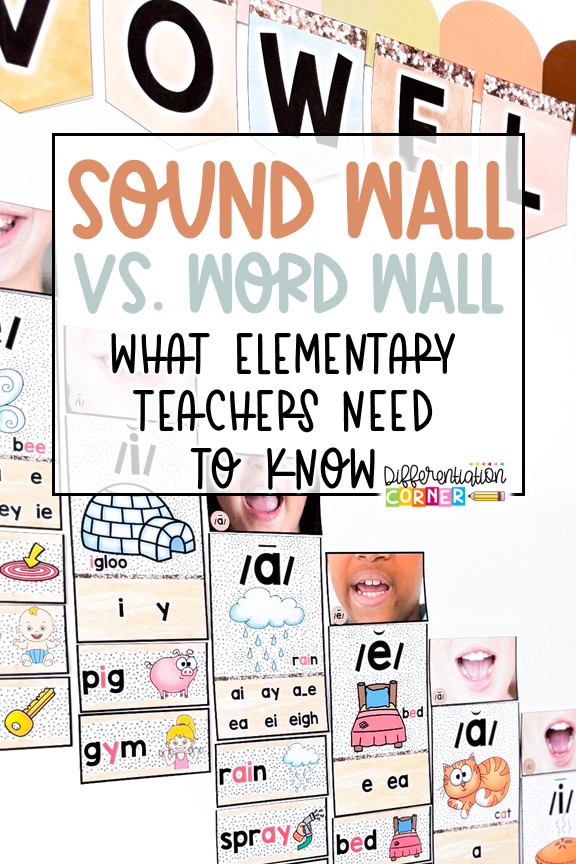
A sound wall is organized around speech sounds, or phonemes, instead of letters of the alphabet.
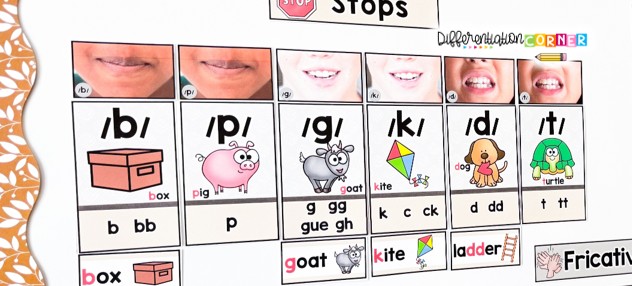
Students start with the sound they hear and then connect that sound to the letters or spelling pattern that represent it.
For example, students may learn where the /m/ sound is produced in the mouth, look at the photo showing how the lips are positioned, and then connect that sound to the letter m.
Sound walls commonly include:
- consonant sounds
- vowel sounds
- mouth photos
- spelling patterns connected to each sound
- keywords and picture cues
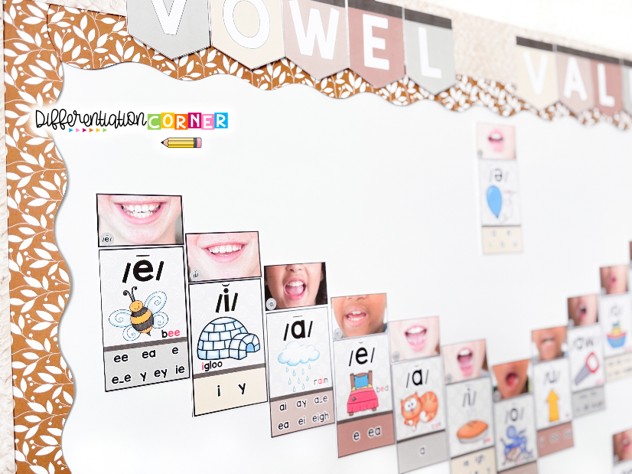
Many sound walls also use a Vowel Valley because vowel sounds work a little differently than consonants.
The biggest thing to remember is that students need to interact with a sound wall during instruction. Otherwise, you have created very educational wallpaper again.
What Is a Word Wall?
A word wall is exactly what it sounds like: a collection of words displayed where students can reference them.

Traditionally, word walls are organized alphabetically and may include:
- high-frequency words
- spelling words
- vocabulary words
- content area words
- words students use frequently in writing
Students might use a word wall when they’re trying to spell, looking for a science vocab word, or checking a word they have learned previously.
The focus is the whole word rather than individual sounds and the different ways those sounds can be spelled.
Sound Wall vs. Word Wall: What’s the Difference?
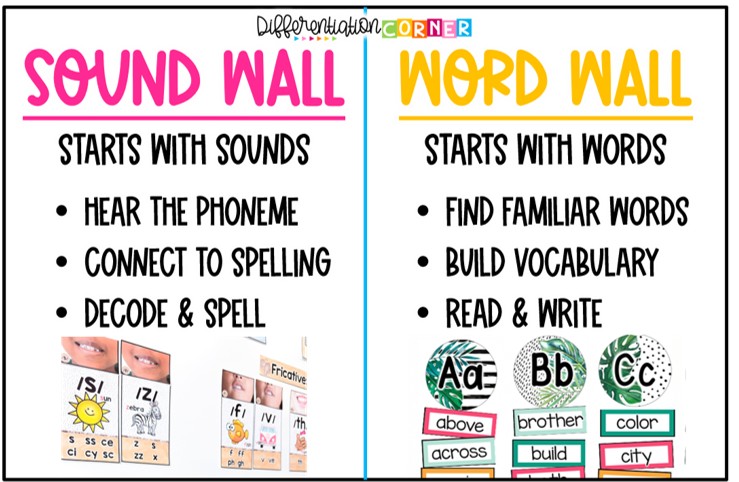
Here’s a simple way to think about it.
Sound Wall
- organized by sounds
- supports phonics & spelling
- starts with what students hear
- connects sounds to spelling patterns
- often used during decoding & encoding
Word Wall
- usually organized alphabetically
- supports vocabulary and word recognition
- starts with written words
- displays complete words
- often used during reading & writing
Sound Walls help students answer questions like:
- What sound do I hear?
- How is my mouth making that sound?
- What letters could spell that sound?
Word Walls help students answer:
- How do I spell this word?
- What was that vocab word again?
- Where can I find the word because for the 147th time today?
Both can be helpful. They’re just helping with different things.
Why Are Teachers Using Sound Walls More Often?
One reason sound walls have become more common is the increased focus on phonemic awareness and explicit phonics instruction.
Teachers are helping students understand how spoken sounds connect to print rather than just memorize a giant collection of words.
Read how to use a sound wall during reading lessons here.
Does a Sound Wall Replace a Word Wall?
Not necessarily. Sound walls and word walls solve different problems.
A sound wall is useful for:
- phonics lessons
- spelling practice
- decoding
- encoding
- word study
A word wall can still be useful during:
- writing
- vocabulary instruction
- science & social studies
- high-frequency word instruction
- content area learning
Read 6 ways to make your word wall more useful.

So Which One Should You Use?
Some teachers may choose to use both.
Others may decide a traditional word wall is something that students don’t use often enough to justify the wall space.
And classroom wall space is prime real estate, so every display should be earning its keep.
Think about what you want the display to help students do.
If your goal is helping students connect sounds to letters and spelling patterns, a sound wall is the better tool.
If your goal is giving students easy access to vocabulary or sight words, a word wall may still make sense.
And yes, you can actually use both.
The important part is that students know why the display is there and how to use it. Because a classroom display that students actually use will always beat one that just looks good in your back to school photos.
Read 10 Classroom Sound Wall Secrets here.